In an era defined by digital noise and urban congestion, the world has turned its eyes toward Japan for a masterclass in architectural tranquility. Japanese house design is not merely an aesthetic choice. It is a philosophy that balances the ancient principles of Zen Buddhism with the rigorous demands of modern, high-density living. Known for its minimalism, seamless integration with nature, and masterful use of space. Japanese architecture offers a blueprint for creating a home that serves as a sanctuary for the soul.
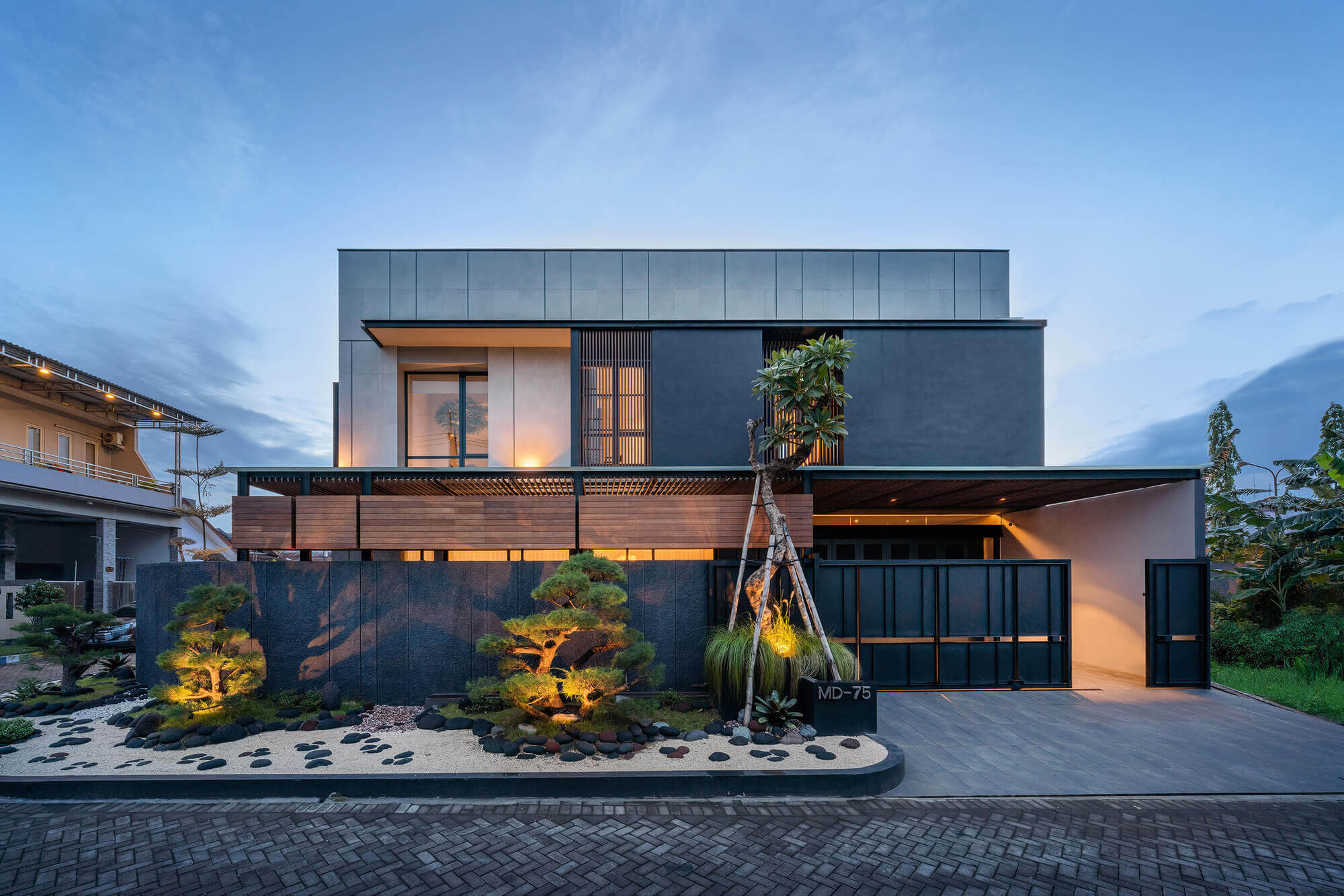
Whether you are looking to build from scratch or simply wish to infuse your current dwelling with a sense of Eastern calm. Understanding the core elements of Japanese design can help you create a space that feels both timeless and profoundly contemporary.
The Concept of Ma: Embracing the Beauty of Empty Space
At the heart of Japanese design is the concept of “Ma.” While Western interior design often focuses on filling space with furniture and decor, Japanese design celebrates the space between objects. Ma is the “void” that allows the mind to rest and the architecture to breathe.
To implement this in a modern home, one must prioritize quality over quantity. Instead of a room crowded with various chairs and tables. A Japanese-inspired living area might feature a single, high-quality low table or a built-in bench. By leaving large portions of the floor and walls clear, you create a visual “silence” that reduces stress and highlights the beauty of the few items you do choose to display. This minimalism isn’t about deprivation; it is about intentionality and finding beauty in simplicity.
Seamless Transitions: Genkan and Engawa
Japanese architecture is famous for its sophisticated handling of transitions—the areas where the outside world meets the private sanctuary.
The Genkan is the traditional entryway where guests and residents remove their shoes. It is usually a stepped area, creating a physical and symbolic boundary between the “dirty” outside and the “clean” inside. In a modern home, a well-defined foyer with a dedicated bench and storage for footwear can replicate this sense of order and transition.
The Engawa is perhaps the most romantic element of a Japanese house. It is a covered veranda or a wooden walkway that runs along the perimeter of the house, acting as a buffer between the interior rooms and the garden. In Western terms, it is a hybrid of a porch and a hallway. Designing an engawa allows you to leave doors open during a light rain, feeling the breeze and hearing the water without getting wet. It blurs the line between the dwelling and the environment, fostering a constant connection with nature.
The Warmth of Natural Materials: Wood, Paper, and Stone
Japanese design leans heavily on a palette of natural, sustainable materials. The goal is to bring the textures and colors of the earth into the living space.
- Wood: Light-colored woods like cedar, cypress (Hinoki), and pine are staples. They are often left unpainted or treated with clear oils to showcase the natural grain. This “honest” use of materials is a core tenet of Japanese craft.
- Shoji Screens: Traditionally made of translucent paper on a wooden frame, shoji screens are used as room dividers or window coverings. They allow soft, diffused light to permeate the home while maintaining privacy. In a modern setting, frosted glass or sheer fabric panels can mimic this ethereal lighting effect.
- Stone and Bamboo: These materials are often used in wet areas like bathrooms or as accents in entryways. A stone-tiled floor or a bamboo-clad wall adds a tactile, grounded feeling to the home.
The Art of Small-Scale Living: Flexible Spaces and Washitsu
Japan is a master of “Micro-Living.” In a Japanese house, rooms are often multifunctional. This is achieved through the use of sliding doors called Fusuma. These allow a large open-plan space to be subdivided into smaller, private rooms in a matter of seconds.
Central to this flexibility is the Washitsu, or the traditional Japanese-style room. These rooms are floored with Tatami mats—woven straw mats that provide a soft, aromatic surface. In a washitsu, there is no permanent furniture. A room can be a dining area during the day (with a low table and cushions), a lounge in the afternoon, and a bedroom at night (by laying out futons). This adaptability is a fantastic idea for modern dwellers living in smaller apartments who need their space to work harder.
The Indoor-Outdoor Connection: Tsuboniwa
Even in the most crowded Japanese cities, architects find a way to include a garden. A Tsuboniwa is a tiny courtyard garden, often no larger than a few square meters, tucked into the center of a house or at the end of a corridor.
These miniature gardens serve as “light wells,” bringing sunshine and fresh air into the deep interior of a building. Decorating a tsuboniwa usually involves a few carefully placed stones, a patch of moss, and perhaps a single maple tree or a stone water basin (tsukubai). It provides a private view of the changing seasons—the falling leaves of autumn or the snow of winter—from the safety and warmth of the indoors.
Conclusion
Japanese house design is a powerful reminder that our homes are a reflection of our internal state. By embracing the principles of Ma, utilizing natural materials, and creating flexible, light-filled spaces, we can build environments that actively promote peace and mindfulness.
You don’t need to live in Kyoto or have a tatami-matted room to benefit from these ideas. The “truth” of Japanese design lies in its respect for the natural world and its commitment to simplicity. Whether it is through a dedicated entryway to shed the stress of the day or the installation of a sliding screen to let in diffused light, the lessons of Japanese architecture invite us to slow down, breathe, and appreciate the quiet beauty of the space we inhabit. When we design with harmony in mind, the house becomes more than just a shelter—it becomes a way of life.